

300 Mesh Iron Powder: How to Choose the Right Grade for Diamond Tool Matrices
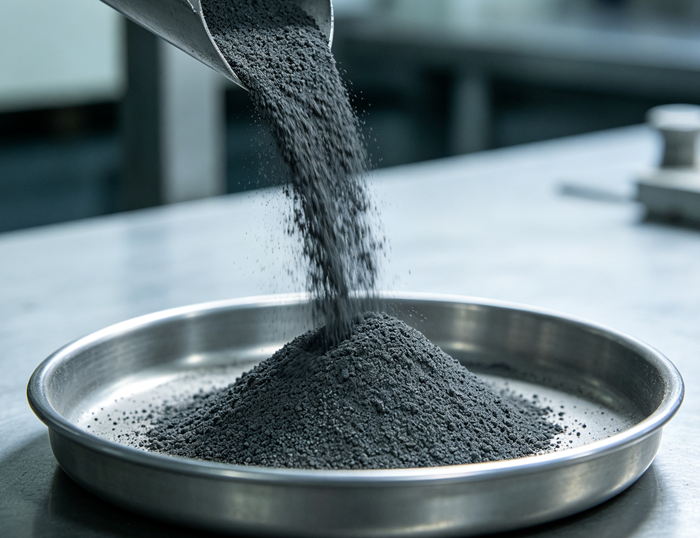
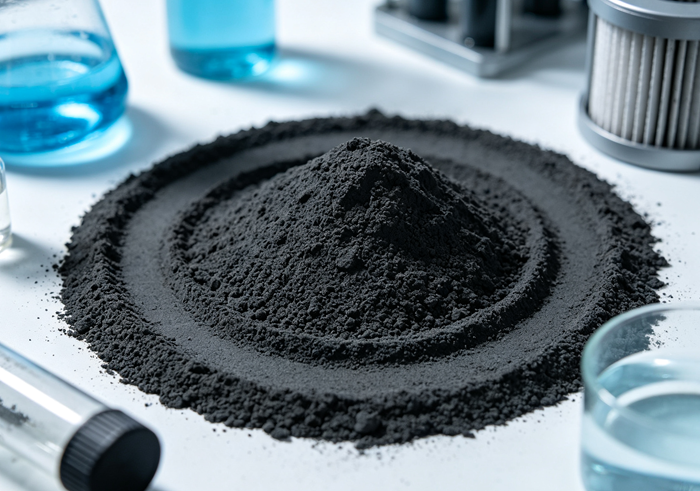
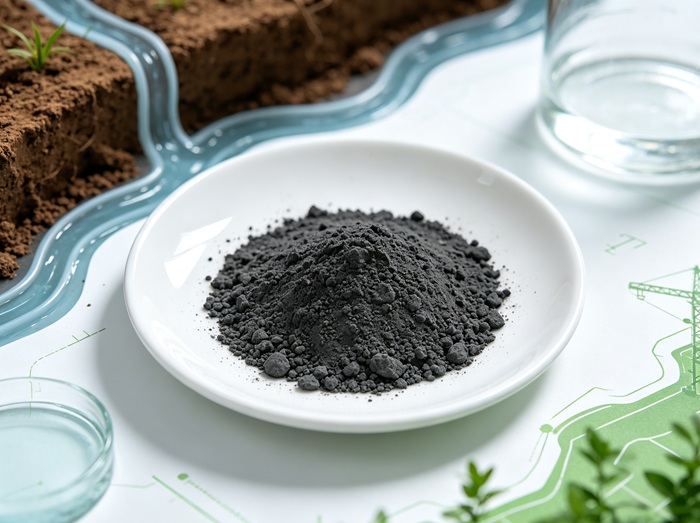
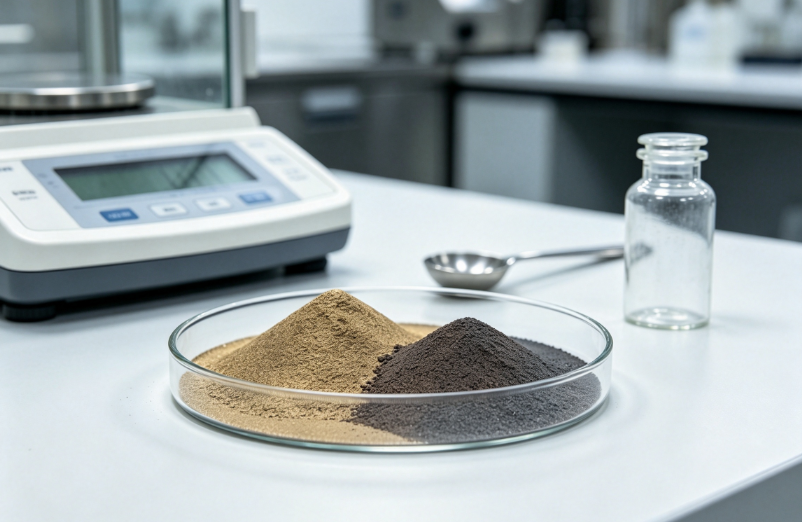
In a diamond tool matrix, Iron Powder does two jobs at once: it holds the diamonds, and it sets how fast the bond wears. What the industry calls300 mesh iron powder is an ultrafine iron powder with a mean particle size of roughly 48 microns and a soft-agglomerated surface treatment. Its original particle size is usually 1000 mesh or finer; the working mesh is tuned to around 300 so automatic die filling and cold pressing stay stable.
-
1. What iron powder does in a diamond matrix
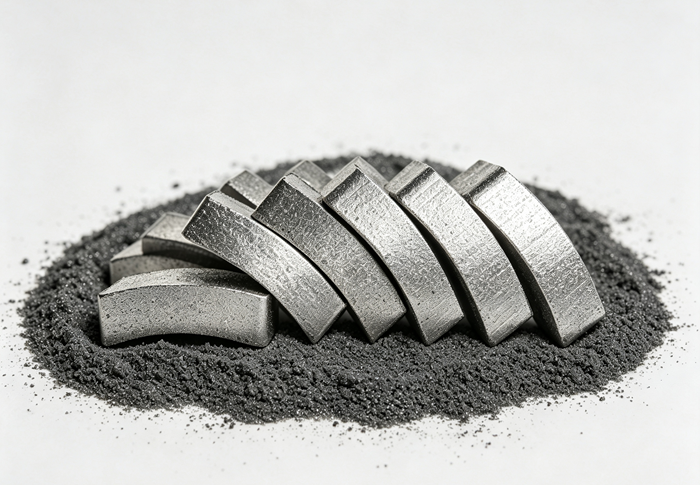
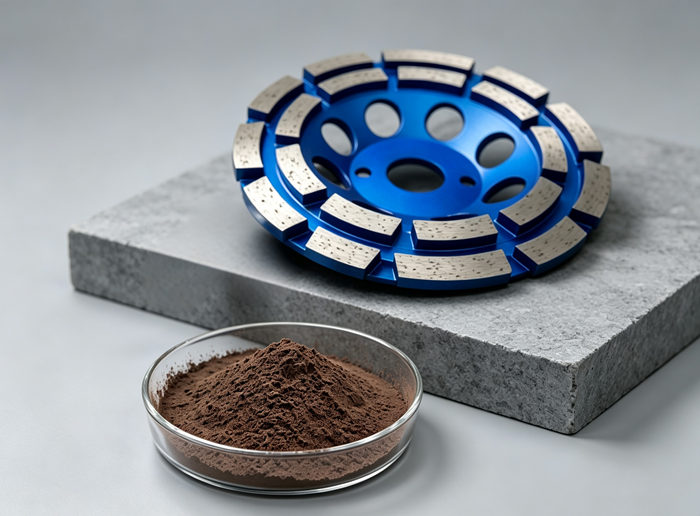
The diamond cuts; the matrix holds it. As the dominant metallic phase of an iron-based bond, iron powder provides the structural skeleton, controls diamond protrusion through its own wear rate, and costs far less than cobalt or nickel — which is why iron-based bonds are the backbone of cobalt-reduction programmes. Research has shown that Fe-Cu bonds reinforced with an Fe-P alloy wear in a manner comparable to cobalt-containing bonds (Materials, 2021, PMC7917933).
-
2. Why 300 mesh is the balance point
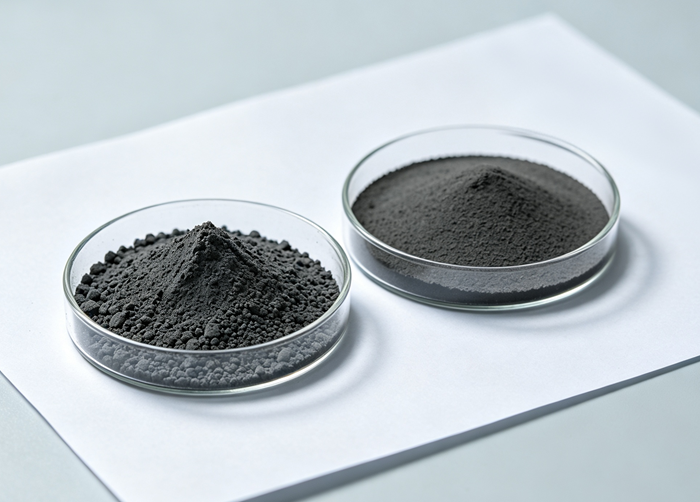
Coarser powders (say −100 mesh) flow well and press to high green density, but sinter poorly and grip the diamond weakly. Sub-micron powders are highly reactive but agglomerate, pack at low apparent density, and fill dies unevenly. Around 300 mesh (≈48 μm) the two curves cross: moderate apparent density, even die filling, sufficient green strength, and still enough diffusion driving force during sintering.
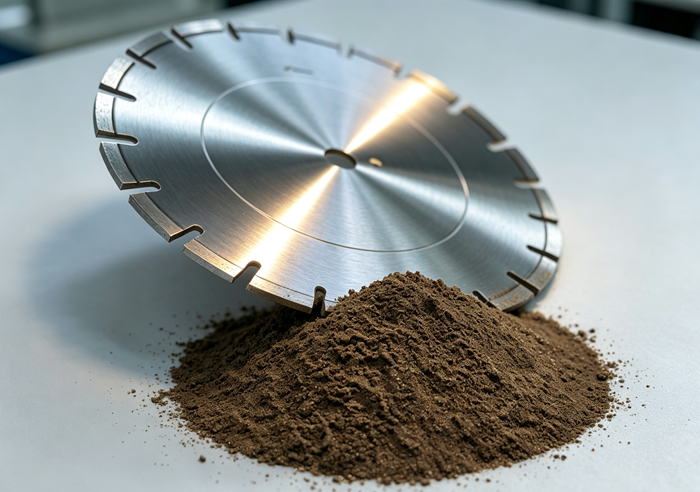
The particle-size/performance link is well documented. A 2025 study on ultrathin diamond dicing blades found that adding 30 wt% of 2000 mesh ultrafine iron powder delivered 98.30% relative density, 1867.88 MPa flexural strength and HRB 107.8 hardness, with cutting performance comparable to cobalt-assisted blades (Journal of Alloys and Compounds, 2025).
-
-
3. Four specs to check before you buy
* Iron content and oxygen: Fe ≥98.5% and O ≤0.66% is a common entry threshold. Excess oxygen suppresses densification, and the symptom shows up directly as low flexural strength.
* Particle size distribution: D50 alone tells you little. A large D90 hurts green strength; a very small D10 means dusting and segregation.
* Phosphorus or pre-alloying: A phosphorus-diffused iron powder (P around 0.07%) lowers the activation energy of sintering and reaches good density at roughly 850 °C.
* Apparent density and flow: 1.2–1.8 g/cm³ suits high loading ratios and automated pressing.
-
4. When one grade covers all four
Few 300 mesh grades cover all four points at once. Take Sagwell's SE-02 as an example: a phosphorus-diffused iron powder with about 0.07% P, an original particle size of 1000–2000 mesh, soft-agglomerated to a working mesh of 300 (D50 47.0–48.4 μm), Fe ≥98.5% and apparent density 1.2–1.8 g/cm³, sintering to 85–100 HRB and 700–1400 MPa flexural strength (source: Sagwell product page and technical notes, 2019-10-15 / 2021-08-27). It is added at high ratios in water-drill bits, wall-chasing blades, stone blades and road-saw segments, where it displaces part of the Cu and Sn in the recipe — the classic "iron for Copper, iron for cobalt" cost route.
-
5. FAQ
- Can 300 mesh iron powder directly replace reduced iron powder? In high-iron bonds it can be substituted at high ratios, but sintering temperature and holding pressure must be re-tuned.
- Why not just use the 2000 mesh base powder? Better reactivity and diamond retention, but low apparent density and heavy dusting make automated filling and cold pressing difficult.
- Will tool life drop after substitution? It depends on whether matrix hardness matches the stone being cut. Fe-P strengthened bonds match cobalt bonds in several working conditions.
-
The value of 300 mesh iron powder is not the mesh number itself — it is that the grade places formability and sintering activity in one controllable window. Lock the application first (water drill, road segment or stone blade), then compare oxygen, particle size distribution, phosphorus content and apparent density one by one. That is usually faster than repeatedly re-testing pressing parameters.